


Heating and cooling systems may share the same goal of keeping a home comfortable, but they do not all require the same type of maintenance. A gas furnace has different components and safety concerns from a central air conditioner, while a heat pump works differently because it can provide both heating and cooling.
Understanding these differences helps homeowners plan sensible preventive care. Regular maintenance can support reliable operation, airflow, efficiency, and a longer service life while also helping identify problems before they become more serious.
What Maintenance Do All HVAC Systems Share?
Regardless of the equipment, some maintenance tasks are common across most HVAC systems. Airflow is particularly important because restricted airflow can make equipment work harder and reduce comfort.
Homeowners should regularly check or replace air filters according to the manufacturer’s recommendations. Vents and return grilles should remain clear of furniture, dust, and other obstructions. Thermostat operation should also be checked to make sure the system responds properly to temperature settings.
Other shared maintenance priorities include checking electrical connections, keeping equipment clean, inspecting condensate drainage, and looking for unusual noises, smells, or changes in performance. More detailed electrical, refrigerant, combustion, or component inspections should generally be handled by a qualified HVAC professional.
Gas Furnace Maintenance
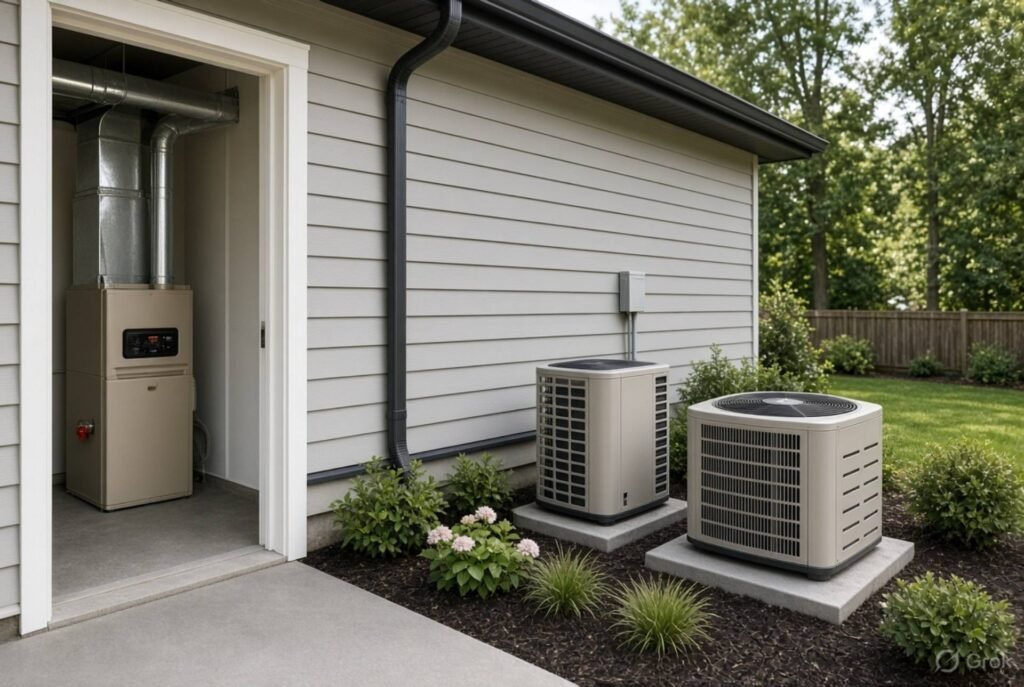
A gas furnace has combustion-related components that require attention beyond basic airflow maintenance. Burners need to remain clean, and the ignition system must operate correctly for the furnace to start safely and consistently. The heat exchanger is another important component. It separates combustion gases from the air circulated through the home, so its condition should be professionally inspected as part of appropriate furnace maintenance.
A technician may also inspect the flue or venting system, safety controls, blower assembly, and other furnace components. Homeowners should not attempt to disassemble combustion equipment or perform safety-critical repairs themselves.
Electric Furnace Maintenance
Electric furnaces do not burn fuel, so they do not have gas burners or combustion gases. However, they still contain electrical heating elements, blower components, controls, and other parts that need proper inspection. Keeping filters clean and maintaining good airflow remains important. Restricted airflow can affect comfort and place additional demand on the system.
Professional servicing can include checking electrical connections, heating elements, controls, blower operation, and safety components. The exact maintenance requirements can vary depending on the furnace design and manufacturer.
Central AC Maintenance
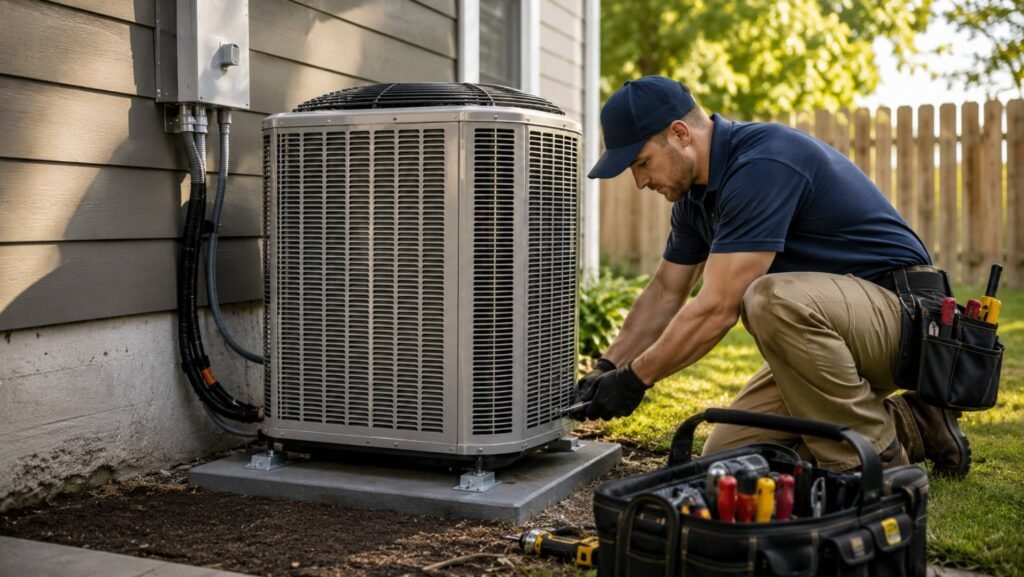
Central air conditioners primarily operate during the cooling season, so seasonal preparation is particularly useful. Outdoor condenser coils can collect leaves, grass, dirt, and other debris that restrict airflow. Indoor components also deserve attention. Filters should be maintained, while the evaporator coil, blower area, condensate drain, and other accessible components should be inspected and cleaned when necessary.
Refrigerant systems require specialist attention. Homeowners should not attempt to open refrigerant circuits or add refrigerant without the appropriate training and equipment. If an AC system is losing cooling performance, repeated professional diagnosis is more useful than simply assuming it needs more refrigerant.
Air-Source Heat Pump Maintenance
Heat pumps have a distinctive maintenance requirement because the same system can provide heating and cooling. This means the equipment may operate for much of the year rather than sitting unused for an extended off-season. Filters, indoor airflow, outdoor coils, electrical components, and condensate management remain important. The outdoor unit should also be kept clear of leaves, vegetation, and other obstructions.
Because a heat pump changes operating mode, technicians may also inspect components involved in reversing operation. The system’s controls, refrigerant circuit, and overall heating and cooling performance should be checked according to the manufacturer’s recommendations.
Ductless Mini-Split Maintenance
Ductless mini-splits have their own maintenance needs because each indoor unit contains components that are directly exposed to the room environment. Filters inside the indoor head should be cleaned or replaced as recommended. Dust can also accumulate around the indoor coil, fan, and housing. Keeping these areas clean can support good airflow and indoor comfort.
The outdoor unit still needs clear airflow and routine inspection. Condensate drainage, electrical components, refrigerant connections, and system performance may also require professional attention.
How Maintenance Priorities Compare
The basic maintenance principles are similar, but the areas requiring specialist attention differ.
- Gas furnaces: Focus on combustion components, burners, heat exchangers, venting, safety controls, filtration, and airflow.
- Electric furnaces: Focus on heating elements, electrical components, blower operation, controls, filtration, and airflow.
- Central AC: Focus on filters, indoor and outdoor coils, condensate drainage, electrical components, and cooling performance.
- Air-source heat pumps: Require attention to both heating and cooling operation, outdoor coils, reversing components, controls, airflow, and refrigerant systems.
- Ductless mini-splits: Require regular indoor-unit cleaning alongside outdoor-unit, airflow, condensate, and refrigerant checks.
This difference is why a generic maintenance checklist is not always enough. The equipment type, installation, usage pattern, climate, and manufacturer’s instructions all influence the appropriate maintenance schedule.
When Professional Maintenance Matters
Some maintenance tasks are straightforward, such as keeping vents clear and maintaining filters. Others involve electricity, combustion, refrigerants, sealed components, or safety controls and should be left to qualified professionals.
Manufacturer instructions should remain the starting point for maintenance intervals and recommended procedures. A professional can also identify wear or developing faults that may not be obvious during a basic homeowner inspection.
Heat pumps deserve particular attention because they can operate in both seasons. Likewise, furnaces need appropriate safety checks because combustion and electrical components can create risks if they are neglected.
Conclusion
Furnaces, central AC systems, heat pumps, and ductless mini-splits all benefit from clean filters, good airflow, proper electrical condition, and regular inspections. However, their maintenance needs are not identical.
Gas furnaces require particular attention to combustion and safety components, while electric furnaces focus more heavily on electrical heating equipment. Central AC systems need seasonal cooling maintenance, whereas heat pumps require year-round attention because they provide both heating and cooling. Ductless systems add regular indoor-unit cleaning to the maintenance routine.
Following manufacturer guidance and arranging professional servicing when needed provides a practical way to keep each HVAC system operating safely, reliably, and efficiently.