


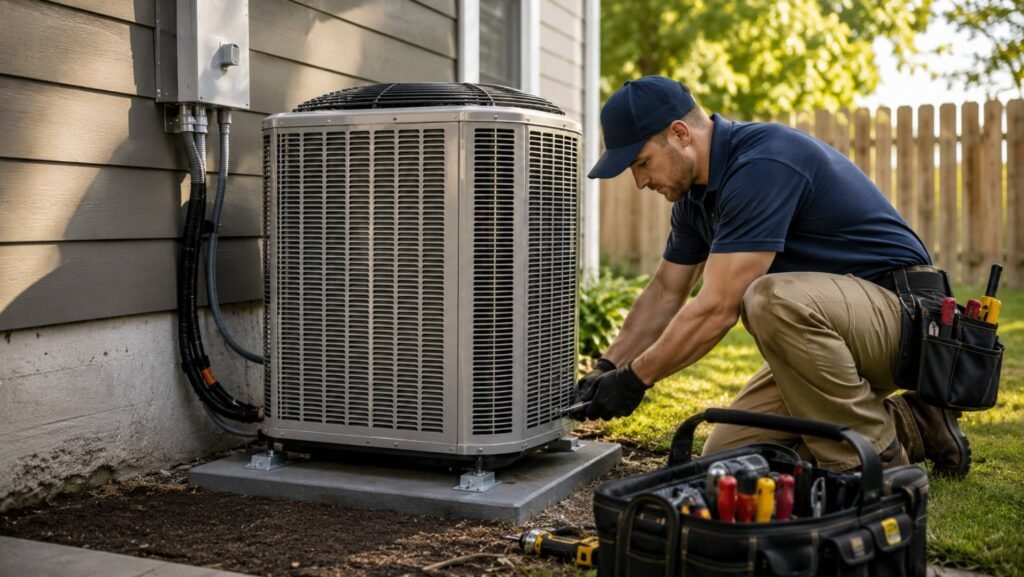

Replacing or installing an air conditioner is a major home investment. The system itself matters, but the quality of the installation can have just as much impact on comfort, energy use, reliability, and equipment life.
A high-efficiency AC will not perform as expected if it is poorly sized, badly installed, or connected to unsuitable ductwork. Likewise, choosing the cheapest equipment may save money initially but create higher operating costs or repair bills later.
The good news is that homeowners do not need to be HVAC experts to make a sensible decision. Understanding the basics of sizing, efficiency, installation quality, and long-term maintenance can make it much easier to compare systems and contractors.
Start With a Proper Load Calculation
One of the most important steps in air conditioner installation is determining how much cooling your home actually needs.
A professional contractor should perform a cooling load calculation rather than simply choosing a system based on the size of the existing AC or the home’s square footage.
The calculation considers factors such as:
- Home size and layout
- Insulation levels
- Window size and orientation
- Number of occupants
- Local climate
- Ceiling height
- Air leakage
- Solar heat gain
- Existing ductwork
This matters because bigger is not always better.
An oversized air conditioner may cool rooms quickly but switch on and off too frequently. This short cycling can reduce efficiency, increase wear, and make humidity control less effective.
An undersized system can struggle to reach the desired temperature, particularly during very hot weather. It may run for long periods while still leaving the home uncomfortable.
The right system should provide enough cooling without excessive cycling.
Evaluate More Than the Equipment Price
When comparing replacement proposals, it is easy to focus on the price of the outdoor unit and indoor equipment. However, the total installation cost can include much more.
Ask whether the quotation covers:
- Equipment and installation
- Removal and disposal of the old system
- New refrigerant lines where required
- Electrical modifications
- Thermostat installation
- Condensate drainage
- Ductwork repairs or modifications
- Mounting pads or supports
- Startup and commissioning
- Permits and inspections
- Warranty registration
A surprisingly low quote may not include necessary work.
Instead of asking only, “How much does the AC cost?” ask, “What exactly is included in the installation?”
That simple question can reveal major differences between competing proposals.
Check the Ductwork Before Replacing the AC
A new air conditioner cannot compensate for badly designed or damaged ductwork.
Leaky ducts can allow conditioned air to escape before it reaches the rooms. Poorly insulated ducts may also gain heat when they pass through hot attics or other unconditioned spaces.
A contractor should inspect the existing duct system for:
- Leaks
- Damaged insulation
- Restricted airflow
- Poorly sized sections
- Loose connections
- Inadequate return-air capacity
- Unbalanced room airflow
If the ductwork is unsuitable for the new equipment, fixing it during installation can produce better results than simply replacing the AC unit.
Compare Efficiency Ratings Carefully
Modern air conditioners are available with different efficiency levels. Higher efficiency can reduce electricity consumption, but the most efficient system is not automatically the best choice for every household.
Standard systems may have a lower upfront price and straightforward controls. Premium equipment may offer better efficiency, quieter operation, variable-speed performance, and improved temperature control.
When comparing systems, consider:
- Purchase and installation cost
- Expected operating hours
- Local electricity prices
- Climate
- Expected length of ownership
- Available rebates or incentives
- Repair and maintenance requirements
The goal is to choose a system whose efficiency and features make sense for the way you actually use your home.
Understand Single-Stage, Multi-Stage, and Variable-Speed Systems
Air conditioners do not all operate in the same way.
A single-stage system generally operates at one cooling capacity. It is often simpler and can be more affordable.
A multi-stage system can operate at different levels depending on demand. This can improve comfort and reduce unnecessary full-capacity operation.
A variable-speed system can adjust its output more gradually. Instead of repeatedly switching between completely off and full output, it can respond more precisely to changing cooling needs.
These advanced systems can provide better temperature consistency and, in suitable homes, improved humidity control and efficiency. However, they typically cost more and may require compatible controls and installation practices.
Consider Ductless and Heat Pump Options
A conventional central AC is not the only replacement option.
Ductless mini-split systems can be useful where extending ductwork is difficult or where individual rooms need separate temperature control. They can also work well for additions, converted spaces, and homes without existing duct systems.
Heat pumps provide both cooling and heating, making them an alternative to installing separate heating and cooling equipment. Their suitability depends on the local climate, existing heating system, electrical setup, and homeowner priorities.
Neither option is universally better. The best choice depends on the building and how the system will be used.
Check Thermostat Compatibility
A thermostat is more than a temperature display.
Some advanced AC systems require specific communicating or compatible controls to access their full capabilities. Installing an incompatible thermostat can limit functionality or prevent the equipment from operating as intended.
Before purchasing a new system, ask:
- Is my existing thermostat compatible?
- Does the new system require a specific control?
- Will I retain zoning features?
- Can the thermostat control humidity or variable-speed operation?
- Are smart-home features supported?
If smart controls are important to you, confirm compatibility before signing the installation contract.
Choose the Installation Location Carefully
Where the equipment is installed can affect performance and serviceability.
The outdoor condenser needs adequate airflow around it. It should also be positioned where technicians can safely access it for inspections and repairs.
The indoor equipment should be installed with enough clearance for maintenance. The location should also allow condensate to drain properly.
Avoid treating equipment placement as an afterthought. A technically functional location may still be inconvenient or difficult to service.
Pay Attention to Condensate Management
Air conditioners naturally remove moisture from indoor air. That moisture collects as condensate and must be drained safely.
Poor condensate management can result in water damage, blocked drains, unpleasant odours, or unexpected shutdowns.
During installation, ask how the contractor plans to handle:
- Primary condensate drainage
- Secondary drainage where required
- Drain pans
- Drain-line access
- Condensate pumps where necessary
- Overflow protection
A good installation should make future maintenance straightforward rather than hiding the drain system where it cannot be inspected easily.
Do Not Ignore Electrical Requirements
A replacement AC may have different electrical requirements from the old equipment.
The contractor should verify that the electrical system can safely support the new unit. Depending on the equipment, installation may require changes to wiring, disconnects, breakers, or other components.
This should be identified during the quotation stage rather than becoming an unexpected cost halfway through the installation.
Installation Quality Matters as Much as Equipment Selection
Even an excellent air conditioner can perform poorly when installation work is rushed.
Professional installation should include appropriate refrigerant-line practices, electrical connections, airflow checks, drainage verification, and system testing.
The contractor should also commission the system before leaving.
Commissioning may involve checking operating pressures, temperature differences, airflow, electrical performance, thermostat operation, and other relevant measurements.
The purpose is simple: confirm that the installed system is actually working as designed.
Ask These Questions Before Hiring an HVAC Contractor
Before accepting a proposal, ask the contractor:
- Will you perform a professional cooling load calculation?
- What equipment size do you recommend, and why?
- Will you inspect the existing ductwork?
- What efficiency rating does the proposed system have?
- Is my current thermostat compatible?
- Are electrical upgrades included in the price?
- How will condensate be managed?
- What commissioning checks will you perform?
- What parts and labour warranties are included?
- Who will handle warranty registration?
- What maintenance does the manufacturer recommend?
- Are permits and inspections included?
- What happens if the system does not perform as expected?
A contractor who can clearly explain these points is generally easier to evaluate than one who focuses only on equipment price.
Plan for Maintenance From Day One
Installing a new AC does not eliminate the need for maintenance.
Regular filter replacement, coil cleaning, condensate drain inspection, airflow checks, and professional servicing can help maintain performance.
Maintenance requirements vary by system, so follow the manufacturer’s recommendations and keep records of professional service.
It is also worth asking about the cost of future repairs and replacement components before choosing highly specialised equipment. Advanced technology can provide useful benefits, but long-term ownership should remain part of the decision.
How to Balance Budget and Long-Term Value
There is no single “best” air conditioner for every homeowner.
A budget-friendly standard system may make sense when upfront cost is the primary concern. A premium variable-speed or multi-stage system may be worthwhile when comfort, efficiency, quieter operation, or humidity control are higher priorities.
The right decision should balance:
- Initial installation cost
- Energy efficiency
- Expected service life
- Comfort requirements
- Maintenance costs
- Repair considerations
- Available features
- Length of time you expect to stay in the home
Think about total ownership cost rather than the purchase price alone.
Conclusion
Choosing a new air conditioner is about more than picking a brand or comparing two prices. Correct sizing, suitable equipment, sound ductwork, proper electrical work, effective condensate management, compatible controls, and thorough commissioning all contribute to a successful installation.
Take time to compare complete installation proposals rather than equipment prices alone. Ask contractors how they calculated the required capacity, what condition your ductwork is in, what the installation includes, and how they will verify system performance.
A well-designed and professionally installed AC system can provide dependable comfort, efficient operation, and fewer avoidable problems for years. The smartest investment is not necessarily the cheapest system or the most expensive one. It is the system that fits your home, your comfort needs, and your long-term budget.